
SMS & WhatsApp Earning Apps in India: What Actually Pays

Every few months a new wave of 'send SMS, earn ₹500 daily' ads rolls across YouTube and Telegram, and every few months the same thing is true: message tasks pay, but they pay small. This guide explains how SMS and WhatsApp earning actually works in India in 2026, what a realistic day looks like in rupees, which kinds of apps are worth your time, and the patterns that separate a real task wall from a recruitment scam.
How message-task earning works
An advertiser wants their link or promo text in front of people. A task app sits in the middle: it gives you the exact message, you send it — by SMS to given numbers, or by WhatsApp to your contacts or groups — the app verifies delivery (screenshot or automatic), and credits a few rupees per completed task. Some platforms bolt this onto a bigger rewards wall: videos to watch, apps to install, surveys, referrals. Gaming platforms do it too — Taurus (the Teenpatti Master platform) runs video, SMS and WhatsApp tasks beside its card tables.
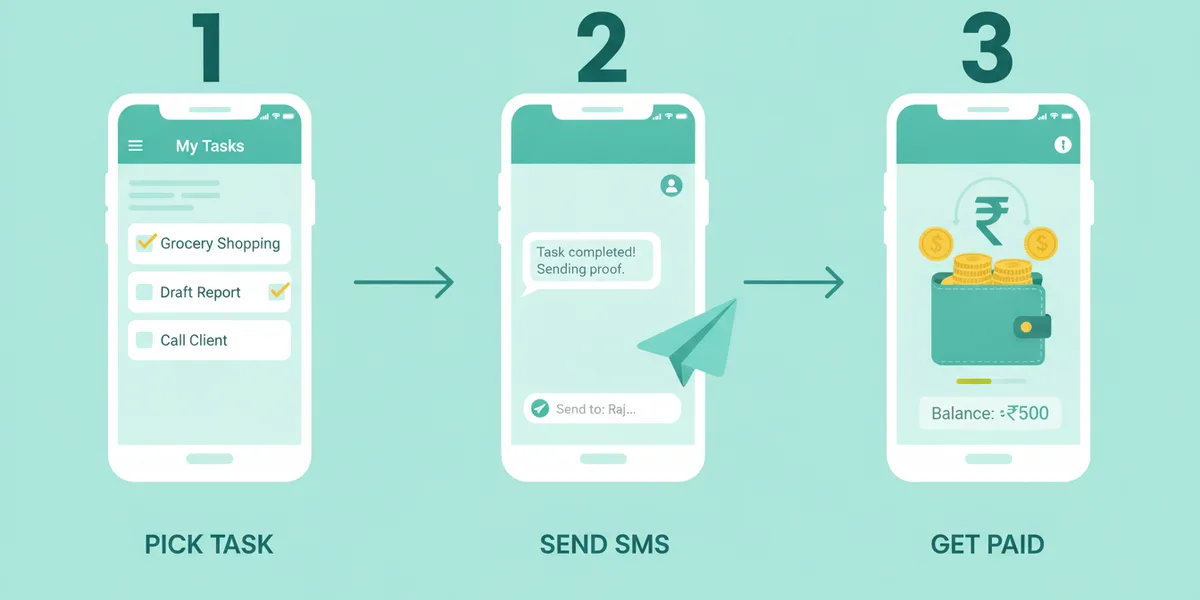
Doing your first task — step by step
- Install the app from the Play Store where possible. If it's APK-only, judge it with the same care as any sideloaded file — our APK install guide shows what to check.
- Register with your mobile number and open the task or rewards section.
- Pick a message task, copy the text exactly, and send it to the numbers or groups the task specifies. Edited messages usually fail verification.
- Submit proof if asked (screenshot of the sent message) and wait for the credit — minutes to a day.
- Withdraw early. The moment you cross the minimum, cash out to UPI. An app that pays ₹15 promptly is worth more than one showing ₹1,500 you can never touch.
Realistic numbers for 2026
- Casual (15–30 min a day): ₹20–60 — the daily task wall empties fast.
- Committed (surveys + installs + messages stacked): ₹100–200 on a good day, not every day.
- WhatsApp sharing to a few small groups: think ₹200–500 a month, not per day.
- The ₹500–1,000-daily people in testimonials: running referral networks — they earn from recruiting you, not from sending messages.
The permission audit — the check that actually protects your bank account
This is the most important section on this page, and it takes two minutes. A message-task app asks you to send a message yourself, from your own keyboard. Work backwards from that and something becomes obvious: a legitimate task app does not need any SMS permission at all. You are the one sending.
| Android permission | What it lets the app do | Does a task app need it? | Verdict |
|---|---|---|---|
| Photos / media | Read the screenshot you upload as proof | Sometimes — if proof is a screenshot | Acceptable |
| Notifications | Tell you a new task is available | Yes, harmless | Acceptable |
| Contacts | Read your entire address book | No — you pick recipients yourself | ⚠ Refuse. Your contact list is the product. |
| SEND_SMS | Send messages without showing you | No — the task is for you to send | ⚠ Refuse. Can silently bill premium numbers. |
| READ_SMS / RECEIVE_SMS | Read every message in your inbox as it arrives | Never | 🚫 Uninstall. This reads your bank OTPs. |
| Accessibility service | See and control everything on screen, in any app | Never | 🚫 Uninstall. This is total device control. |
| Display over other apps | Draw on top of other apps, including your banking app | No | 🚫 Uninstall. Used for tap-jacking overlays. |
Check it in 60 seconds, before or after install: on Android open Settings → Apps → [the app] → Permissions and read the “Allowed” list. Then check Settings → Accessibility → Downloaded apps and make sure it is not listed there. Anything on the refuse list above, revoke it; if it stops working without SMS-read access, that tells you what it was really doing.
Net, not gross: what a task actually costs you
Every earning page quotes what you are paid. None subtract what you spend. For SMS tasks specifically, the second number is not zero:
| Line item | Typical value | Notes |
|---|---|---|
| Paid per verified message task | +₹1 to ₹5 | Credited after verification, not on send |
| SMS cost outside a bundled pack | −₹0.10 to ₹1 each | Zero if inside your plan's free SMS; not everyone has one |
| Your time, incl. screenshot proof | 1–2 min | The real cost, and the one nobody counts |
| Failed / rejected tasks | 10–30% of attempts | Edited text, late proof, unverified delivery — paid nothing |
| Contact goodwill | Unpriceable | Spent once per person, and it does not come back |
Net that out and a ₹3 task with a 20% rejection rate is really worth about ₹2.40, minus SMS cost, for ninety seconds of work. It is genuinely positive if your plan bundles SMS and you were idle anyway. It goes negative the moment you are paying per message or chasing rejected tasks.
Why the pay is small — and why it will stay small
Understanding the advertiser's side of the trade explains every number on this page and immunises you against the next “₹500 daily” ad.
An advertiser pays a task platform for delivered promotional messages. Of the people who receive one, a small fraction click, and a small fraction of those sign up — cold promotional forwards convert at a low single-digit percentage at best. So the advertiser can only pay a few rupees per delivery and still profit, the platform takes its cut of that, and what reaches you is what is left. The ceiling is set by conversion economics, not by how hard you work — which is precisely why the pay is capped, why it does not scale with effort, and why every promise of a fixed high daily income is either referral recruitment or fiction.
The same arithmetic tells you where task apps do make sense: dead time you were not using anyway, on a plan where messages cost you nothing, with a low withdrawal floor you can test on day one.
Real task wall vs recruitment scam — the tells
- Real: small per-task amounts, low withdrawal minimum (₹10–50), pays on the first cashout, tasks don't require money.
- Scam: big fixed daily promises, joining or deposit fees, withdrawal thresholds that rise as you approach them, earnings that only unlock after you recruit others.
- Grey zone: platforms that pay for tasks but constantly push your balance toward in-app betting or box-opening. The task money is real; the nudge is the business model. We looked at one example in our Crown 11 review.
One more honest note: message tasks monetise your contacts' attention. A few forwards is fine; carpeting your family groups with promo links daily costs you something no app can pay back. If a platform's referral programme interests you more than its tasks, read how refer & earn really works first — the terms decide whether you ever see the bonus.