

Card games have been a favorite pastime for people around the globe for centuries. They bring friends and family together, offer exciting challenges, and can even be played alone for some quiet fun. Whether you enjoy strategy, luck, or a mix of both, there’s a card game for everyone. In this detailed blog, we explore the top 10 most popular card games based on how many people have played them, drawing from reliable surveys and lists. These games use a standard 52-card deck in most cases, making them easy to pick up with items you likely already have at home. We’ll cover their history, basic rules, why they’re so loved, and some tips to get started. If you’re searching for the best card games to play with friends or solo, this guide has you covered. Let’s dive in and discover what makes these games timeless hits.
1. Solitaire: The Classic Solo Adventure
Solitaire tops the list as the most popular card game, with surveys showing that over 80% of Americans have played it at some point. This single-player game has roots going back to the 18th century in Europe, where it was known as “Patience.” It gained massive popularity in the digital age when it was included as a free game on Windows computers in the 1990s, introducing it to millions worldwide. Today, with mobile apps and online versions, Solitaire remains a go-to for quick entertainment during breaks or commutes.
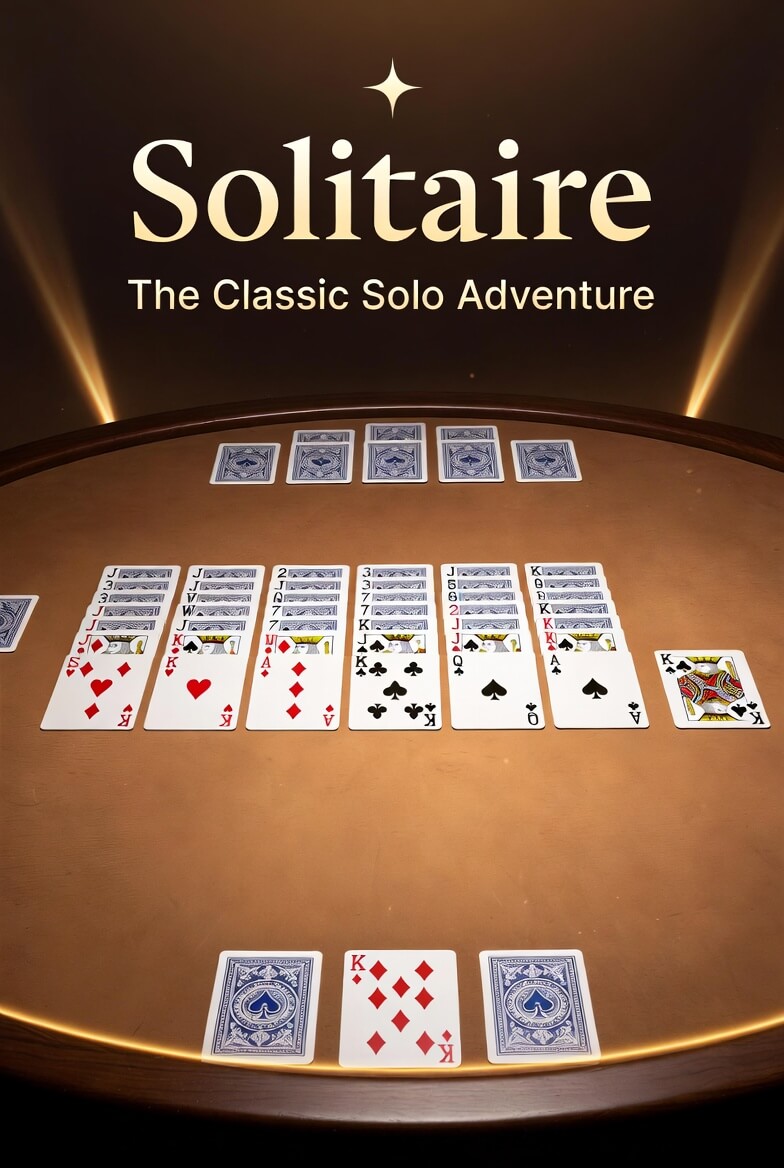
The basic setup uses a standard 52-card deck. You shuffle the cards and deal them into seven columns, with the first column having one card, the second two, and so on up to seven, but only the top card of each column is face up. The remaining cards form a draw pile. The goal is to build four foundation piles, one for each suit, starting from Ace and going up to King in ascending order. You move cards between columns in descending order and alternating colors—for example, a black 7 on a red 8. If you uncover a face-down card, flip it up, and use the draw pile to help when stuck. The game ends when all cards are in the foundations or no more moves are possible.
What makes Solitaire so appealing is its simplicity and the perfect balance of luck and strategy. You don’t need anyone else to play, making it ideal for solo relaxation. Variations like Klondike (the standard one), Spider (using two decks and all suits), and Freecell (where all cards are visible from the start) keep things fresh. Many people find it therapeutic, as it requires focus but isn’t overly stressful. If you’re new, start with the classic version on your phone—it’s free and teaches you as you go. With billions of games played digitally each year, Solitaire’s popularity shows no signs of fading.
2. Go Fish: Fun for All Ages
Coming in strong with nearly 80% of people having tried it, Go Fish is a staple for family game nights and kids’ parties. This game dates back to the mid-19th century in England, evolving from simpler matching games. It’s often one of the first card games children learn because of its straightforward rules and emphasis on memory and politeness—players literally say “Go fish!“ when they can’t help.
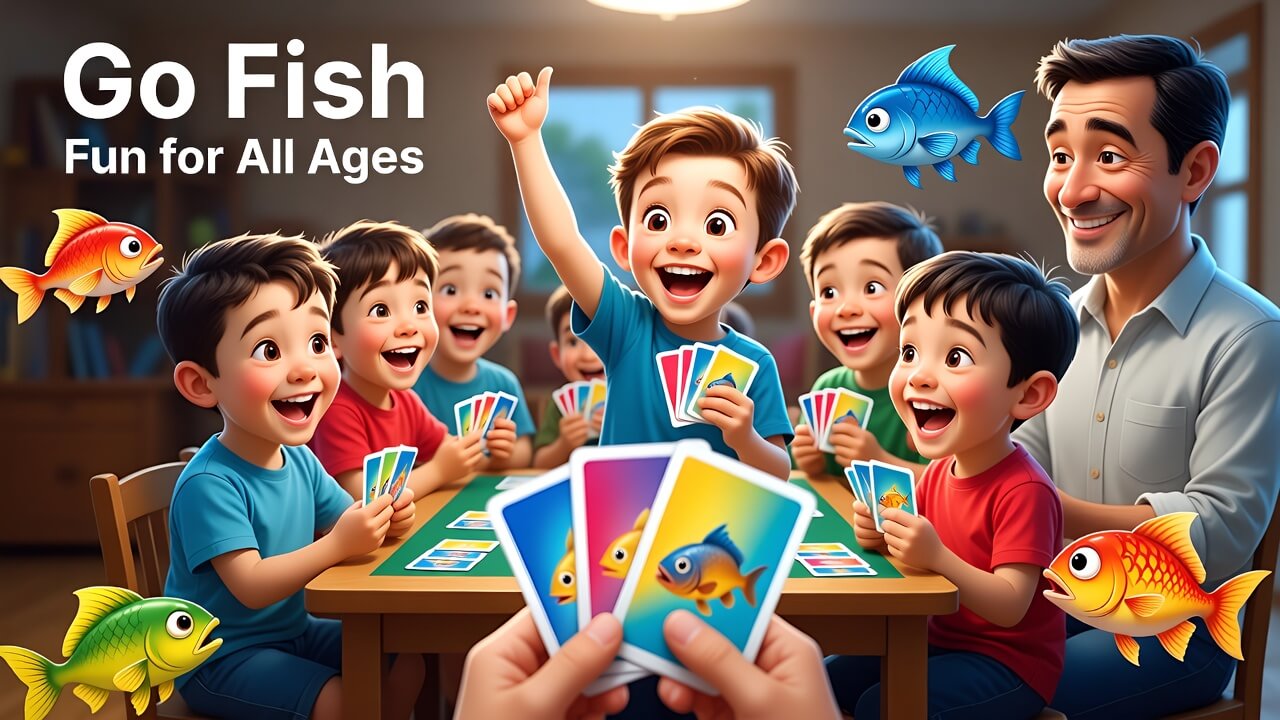
To play, you’ll need a standard deck of 52 cards and 2 to 6 players, though it works best with 3 to 5. Deal 5 cards to each player if there are 4 or more, or 7 if fewer. The rest form a draw pile. The aim is to collect as many “books” as possible, where a book is four cards of the same rank, like all four 7s. On your turn, ask another player for a specific rank you hold, such as “Do you have any Queens?” If they do, they give them all to you, and you get another turn. If not, they say “Go fish!“ and you draw from the pile. If the drawn card matches what you asked for, show it and go again. The game continues until the draw pile is empty or all books are formed, and the player with the most books wins.
Go Fish’s charm lies in its social aspect and low barrier to entry. It’s not about complex strategies but about luck, bluffing a bit, and enjoying the interactions. Kids love the excitement of guessing right, while adults appreciate how it teaches basic skills like counting and memory. Variations include using jokers as wild cards or playing with themed decks for extra fun. It’s perfect for rainy days or travel, requiring no special equipment. With its enduring appeal across generations, Go Fish remains a top choice for casual gaming.
3. Blackjack: The Thrill of 21
Blackjack, also known as 21, has been played by about 70% of surveyed adults, making it a casino favorite and home game alike. Its origins trace to 17th-century France with a game called Vingt-et-Un, which spread to America in the 1800s. Casinos boosted its fame by offering bonuses for certain hands, like a black Jack with an Ace, hence the name.

Played with a standard deck (or multiple in casinos), it involves 2 to 7 players against a dealer, but you can play solo variations too. Each player gets two cards face up, dealer one up and one down. Cards 2-10 are face value, face cards 10, Ace 1 or 11. The goal is to get closer to 21 than the dealer without going over. Options include “hit” for another card, “stand” to keep your total, “double down” to double your bet and take one more card, or “split” pairs into two hands. Dealer must hit until 17 or more. If you bust (over 21), you lose; otherwise, higher than dealer wins even money, blackjack (Ace + 10-value) pays 3:2.
Blackjack’s popularity stems from its blend of luck and decision-making—basic strategy charts can reduce the house edge to under 1%. It’s fast-paced, exciting, and social in group settings. Home versions skip betting for fun, focusing on beating the dealer. Variations like Spanish 21 (no 10s) or Pontoon add twists. Whether at a Vegas table or kitchen counter, Blackjack offers adrenaline without needing deep expertise, explaining its widespread love.
4. Old Maid: The Matching Mischief
Old Maid has charmed around 66% of people, especially as a childhood classic. Believed to originate in 19th-century England from a game called “Black Peter,” it involves avoiding the unpaired card, often a Queen made the “Old Maid.”
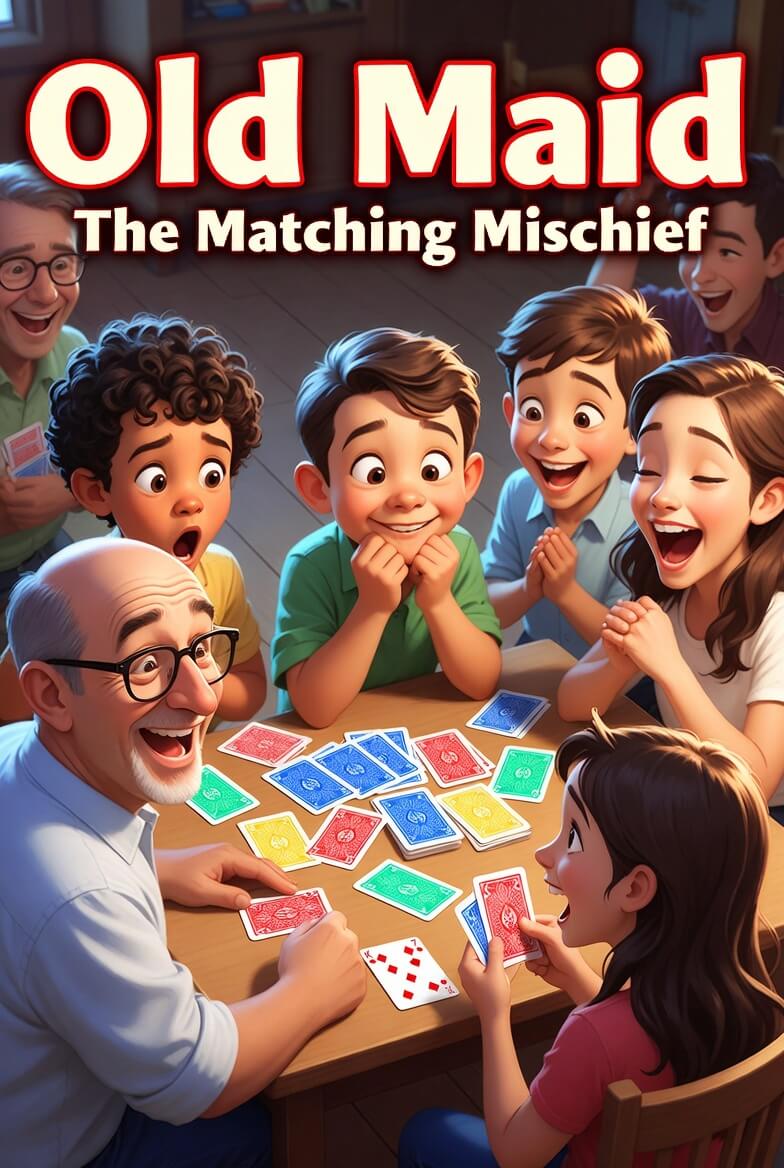
Use a standard deck minus one Queen, so 51 cards, for 2 to 8 players. Deal all cards out. Players discard pairs of same-rank cards face up. Then, taking turns, draw one card from the player on your left’s fanned-out hand (face down). If it pairs with one of yours, discard the pair. Continue until all pairs are gone, and the player left with the unpaired Queen loses.
The game’s appeal is in the suspense and laughter when someone draws the Old Maid. It’s simple, teaching matching and strategy in hiding the bad card. No complex rules make it great for kids, but adults enjoy the light-hearted competition. Variations use custom decks with characters instead of the Queen. Its quick setup and playtime keep it popular for family gatherings.
5. War: The Battle of Chance
With 62% familiarity, War is the epitome of pure luck games. It emerged in the early 20th century, possibly from casino games, and is loved for its no-skill requirement.

For 2 players (or more with variations), split the deck evenly, face down. Both flip top cards; higher rank wins both, added to bottom of winner’s pile. Ties lead to “war”: place three face down, one up; higher up wins all. Continue until one has all cards.
War’s simplicity makes it accessible, ideal for teaching kids about ranks. It’s relaxing yet tense during wars. Variations add jokers as highest or multiple decks. Perfect for travel, its enduring popularity comes from effortless fun.
6. Poker: Strategy and Bluffs
Poker, played by 60%, is iconic for its depth. Originating in 19th-century America from European games, it exploded with the World Series of Poker.

Standard Texas Hold’em: 2-10 players, each gets two hole cards. Five community cards dealt in stages (flop, turn, river). Bet rounds in between. Best five-card hand wins, from high card to royal flush.
Poker’s allure is psychology—bluffing and reading opponents. Variations like Omaha (four hole cards) vary it. Tournaments add excitement. It’s social and strategic, popular in homes and online.
7. Crazy Eights: Wild and Versatile
56% have played Crazy Eights, a shedding game from the 1940s, similar to Uno but with standard decks.
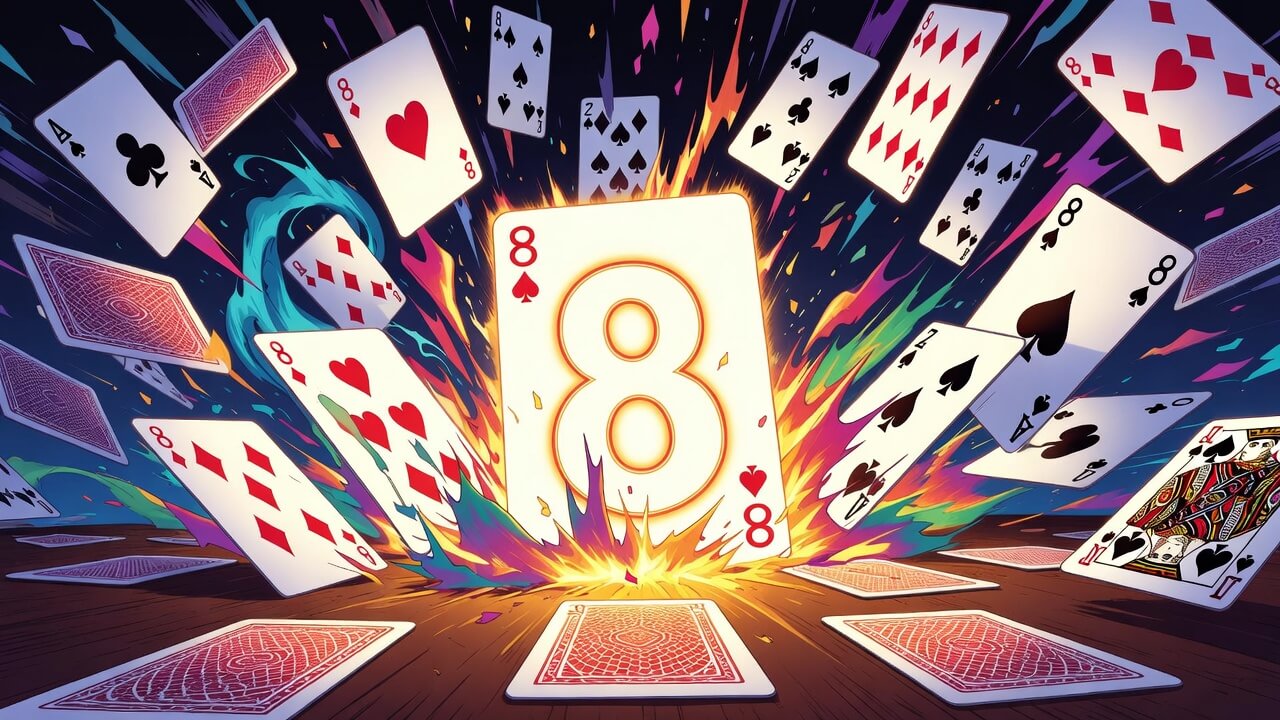
2-7 players, deal 5-8 cards each. Start with a card; match suit or rank, or play 8 to change suit. Draw if can’t play. First to empty hand wins.
Fun from wild eights and quick pace. Teaches adaptability. Variations penalize certain cards. Great for groups, its flexibility boosts popularity.
8. Gin Rummy: Sets and Sequences
52% know Gin Rummy, invented in 1909 New York as a faster Rummy.
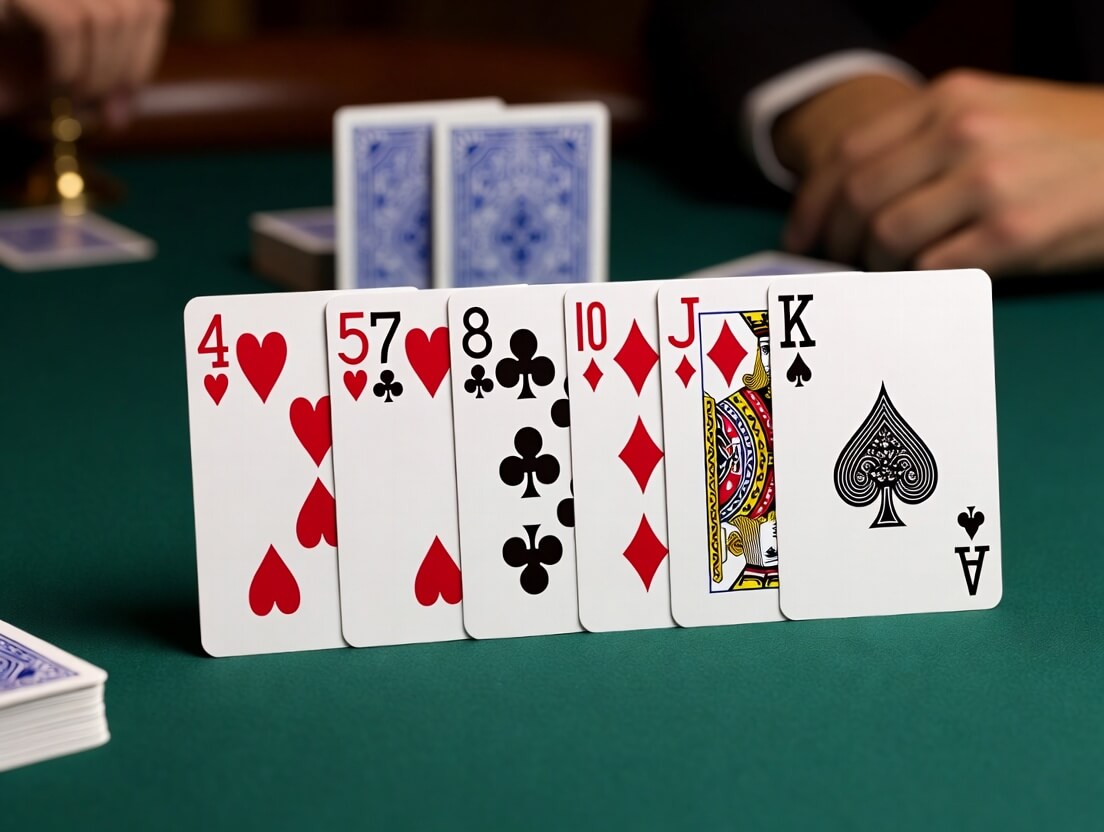
2 players, 10 cards each. Form melds: sets (same rank) or runs (same suit sequence). Draw/discard to improve hand. “Gin” for perfect hand, bonus points.
Strategy in discarding safely. Popular for head-to-head play. Variations allow more players. Its balance of luck/skill keeps it engaging.
9. Spades: Partnership Tactics
50% have tried Spades, created in 1930s US by students.
4 players in teams, 13 cards each. Bid tricks to win. Spades trump. Score for meeting bids, penalties otherwise.

Teamwork and prediction key. Variations include solo. Thrilling for groups, its strategy ensures lasting appeal.
10. Hearts: Avoiding the Bad Cards
46% familiarity for Hearts, from 19th-century Reversis.
4 players, 13 cards. Pass cards, then play tricks avoiding hearts and Queen of Spades (13 points). Lowest score wins.

Strategy in dumping high cards. Digital versions popular. Social and clever, it’s a favorite for evenings. To compare these games at a glance, here’s a handy table:
| Game | Number of Players | Deck Type | Skill Level | Play Time |
|---|---|---|---|---|
| Solitaire | 1 | Standard 52 | Medium | 5-15 min |
| Go Fish | 2-6 | Standard 52 | Low | 10-20 min |
| Blackjack | 2-7 | Standard 52+ | Medium | 5-10 min/round |
| Old Maid | 2-8 | Standard 51 | Low | 10-15 min |
| War | 2 | Standard 52 | Low | 20-30 min |
| Poker | 2-10 | Standard 52 | High | 30+ min |
| Crazy Eights | 2-7 | Standard 52 | Medium | 15-25 min |
| Gin Rummy | 2 | Standard 52 | High | 10-20 min |
| Spades | 4 | Standard 52 | High | 30-45 min |
| Hearts | 4 | Standard 52 | Medium | 20-30 min |
In conclusion, these top 10 card games offer something for every mood and group size. From the solitary peace of Solitaire to the team spirit of Spades, they prove why card games endure. Grab a deck and try one today you might discover a new favorite. Whether for fun or competition, they’re a simple way to connect and enjoy.
